Short on time? In 1904 Louis Cartier made a wristwatch for his friend Alberto Santos-Dumont, a Brazilian aviator living in Paris who wanted to read the time without letting go of the controls. The square case with its exposed screws went on sale in 1911, with movements from Edmond Jaeger. More than a century later, Cartier still makes two descendants: the Santos de Cartier, on its screwed bracelet, and the slimmer Santos-Dumont, on a leather strap.
Backstory
At the start of the 20th century, Alberto Santos-Dumont was one of the most famous men in Paris. He was the son of a rich Brazilian coffee family, and he flew airships around the city, sometimes landing outside cafés. In 1906 his 14-bis flew at Bagatelle, in front of witnesses, in what's recognised in Europe as one of the first powered aeroplane flights.
He was also a regular at Maxim's and a friend of Louis Cartier. The story, told by Cartier and repeated ever since, is that Santos-Dumont complained he couldn't check his pocket watch in the air. Both hands were busy flying. So Cartier made him something he could wear on his wrist.
The 1904 Watch
The watch Cartier came up with in 1904 didn't look like a pocket watch on a strap. It was square, with a flat bezel and exposed screws. That's a big part of why it still looks modern. It used the visual language of the machines Santos-Dumont flew, not of the jewellery Cartier sold.
You'll often read that it was the first men's wristwatch, or the first pilot's watch. It's a nice line, but we'd be careful with it. Wristlets for women had been around for decades, and soldiers were already strapping pocket watches to their arms. What's fair to say is that the Santos was one of the first wristwatches designed as one from the ground up, for a man, with a purpose, and it helped make wearing a watch on the wrist acceptable.
Jaeger and 1911
The watch wasn't sold to the public straight away. In 1907 Cartier signed an exclusive agreement with Edmond Jaeger, who supplied the movements, and in 1911 the Santos went on sale. Jaeger also designed a folding buckle with Louis Cartier, patented in 1910. Jaeger's firm later merged with LeCoultre, which is where the Jaeger in Jaeger-LeCoultre comes from.
Santos and Santos-Dumont
This is where it gets confusing. Today, Cartier has two lines.
The Santos de Cartier is the sporty one: a square case on a bracelet with screws running across the links. That's the one you see everywhere since its 2018 relaunch.
The Santos-Dumont is closer to the 1904 watch. It came back as its own line at SIHH in 2019: thin, quartz, on a leather strap, in steel, two-tone or rose gold. Not long after, Cartier added the larger XL with the manual-wind 430 MC, a Cartier adaptation of Piaget's 430P, with around 38 hours of power reserve. Limited editions since then have referenced Santos-Dumont's aircraft.
On the Wrist
The Santos-Dumont is a dress watch, and a very good one. It's thin enough to disappear under a cuff, and the square shape gives it more presence than its size suggests. The quartz versions are the practical buy. The manual-wind ones are the enthusiast pick, if you don't mind winding every day or two.
The honest downside: it's not a do-everything watch. There's no bracelet option and water resistance is limited, so if you want one Cartier for daily wear, the Santos de Cartier is the more sensible choice.
Final Thoughts
The Santos-Dumont matters because it was designed to solve a real problem for a real person, and the shape that came out of that problem still works more than a hundred years later. Square watches have been chasing it ever since.
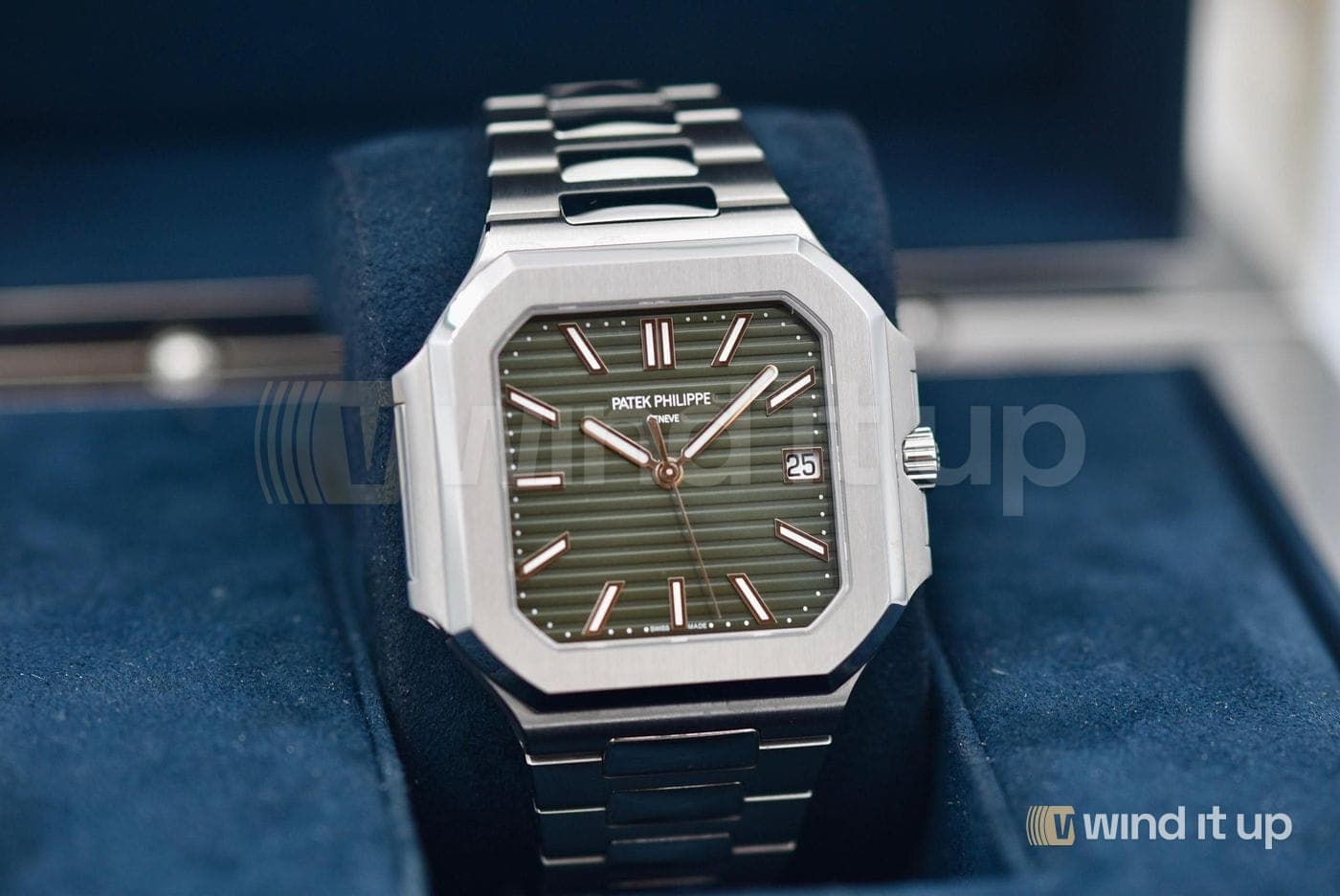
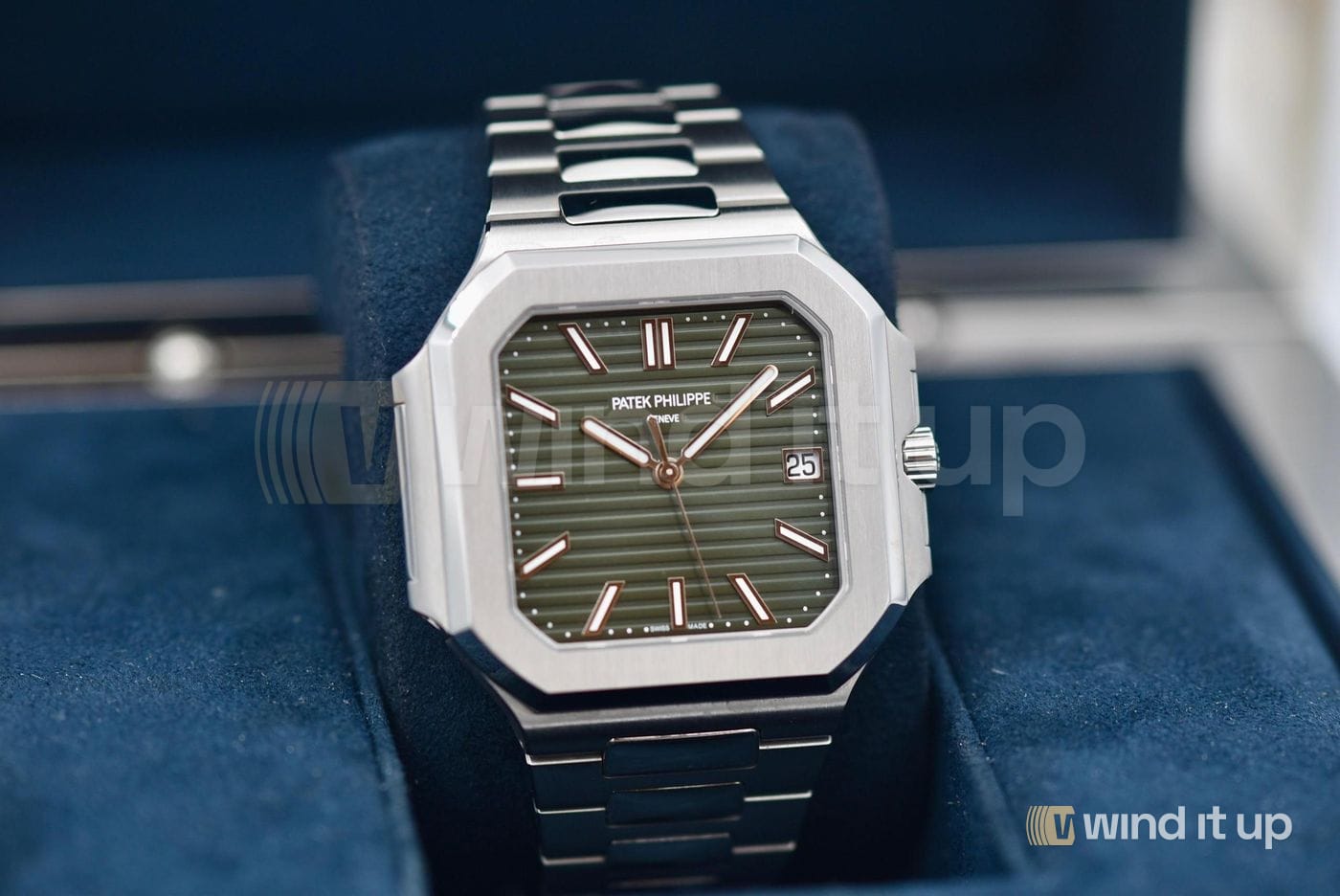
We don't have a Santos-Dumont in the safe right now, but we do have its sportier sibling: a Santos de Cartier medium with the green dial. Looking for a specific Santos-Dumont? Ask us to source it.