Short on time? François-Paul Journe was born in Marseille in 1957. He trained as a watchmaker and joined his uncle's antique clock and watch restoration workshop in Paris. His first big piece was a tourbillon pocket watch, finished around 1983 after more than five years of work. He spent the 1980s and 1990s making complications for collectors and other brands, then launched his own brand in Geneva in 1999 with the Tourbillon Souverain. The Chronomètre à Résonance followed in 2000 and the Octa in 2001.
Backstory
Journe wasn't a model student. He was sent to a technical college at 14, and watchmaking school in Marseille was where it started to make sense. He finished his training in Paris in the mid-1970s and went to work for his uncle, Michel Journe.
Michel restored antique clocks and watches, and was one of very few specialists doing it at that level. That's where François-Paul learned the trade. Not on modern calibres, but on centuries-old clocks and pocket watches made by people like Breguet. Restoring something like that means understanding why every part was made the way it was. That habit of looking backwards for ideas is all over his later work.
The Tourbillon
When he was about 20, Journe started building his own tourbillon pocket watch. He used George Daniels' book Watchmaking as his guide, and Daniels later became something of a mentor. It took him more than five years to finish, around 1983.
That's how he became known. By the mid-1980s he was working independently, making complicated one-off pieces for private collectors.
Making Watches for Other People
In 1989 he co-founded THA in Sainte-Croix with Denis Flageollet, who went on to found De Bethune, and other watchmakers including Vianney Halter. THA built complications and movements for other brands, including a monopusher chronograph for Cartier's CPCP collection. A lot of the best independent talent of the next 20 years passed through that workshop.
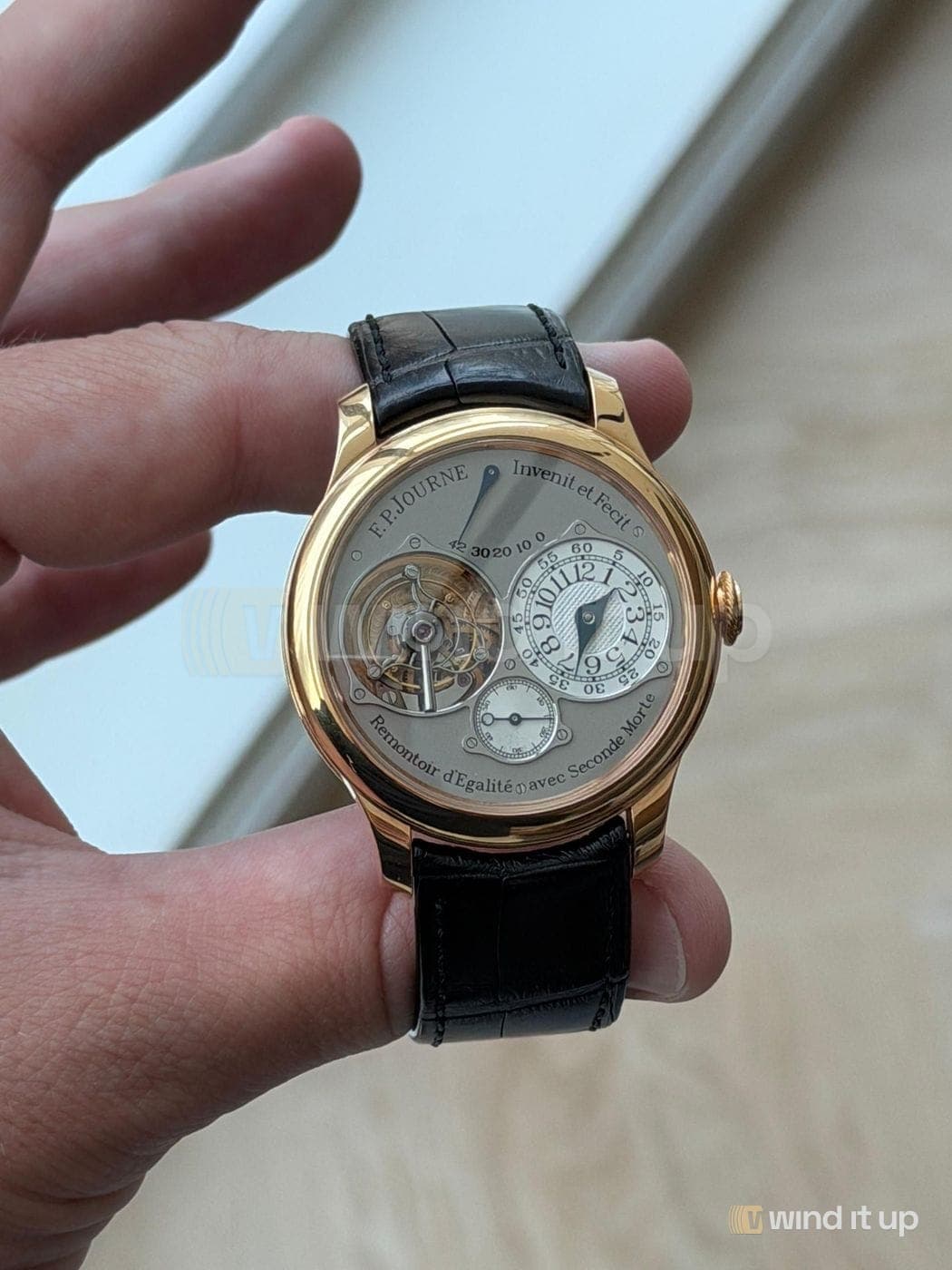
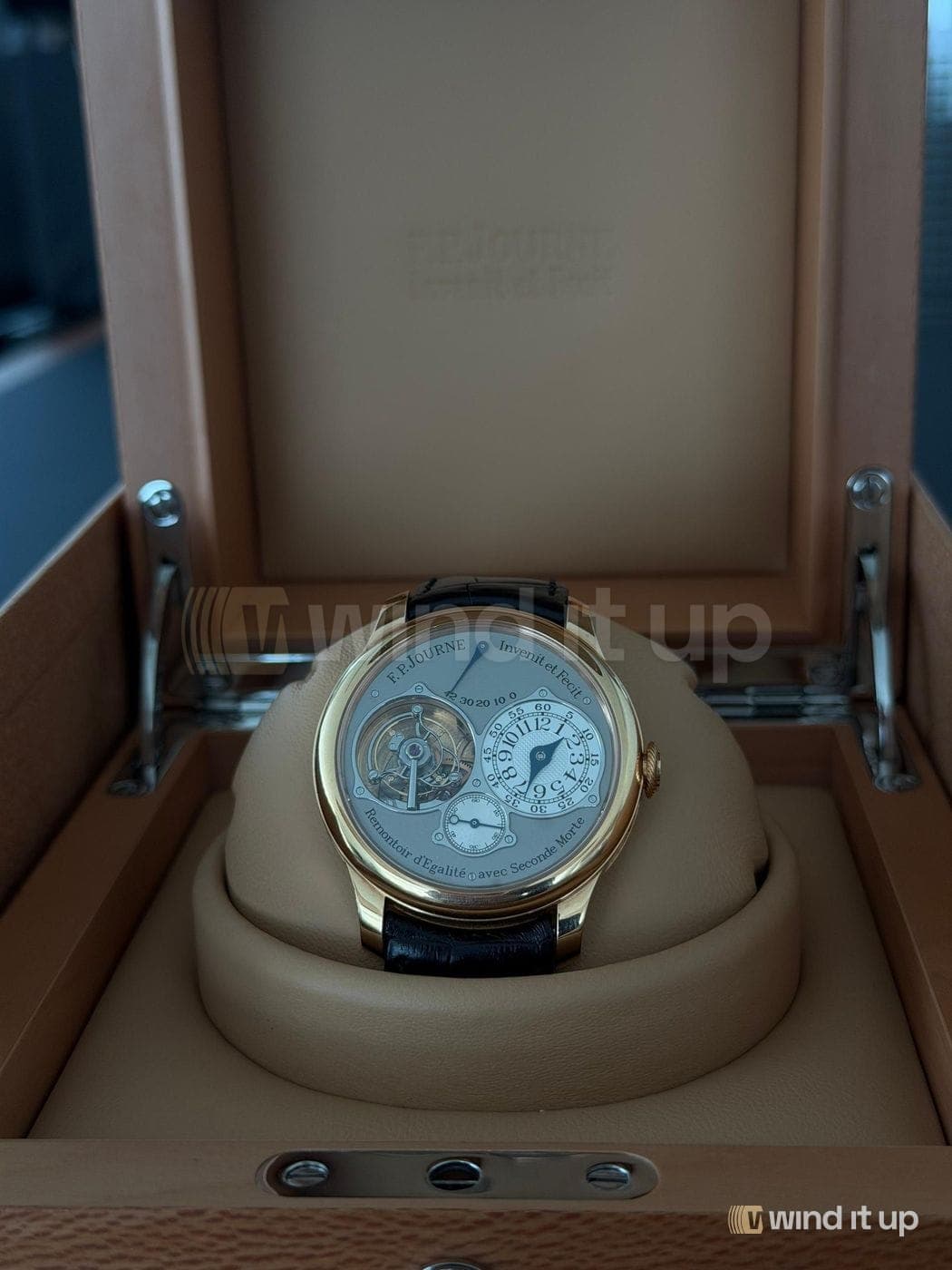
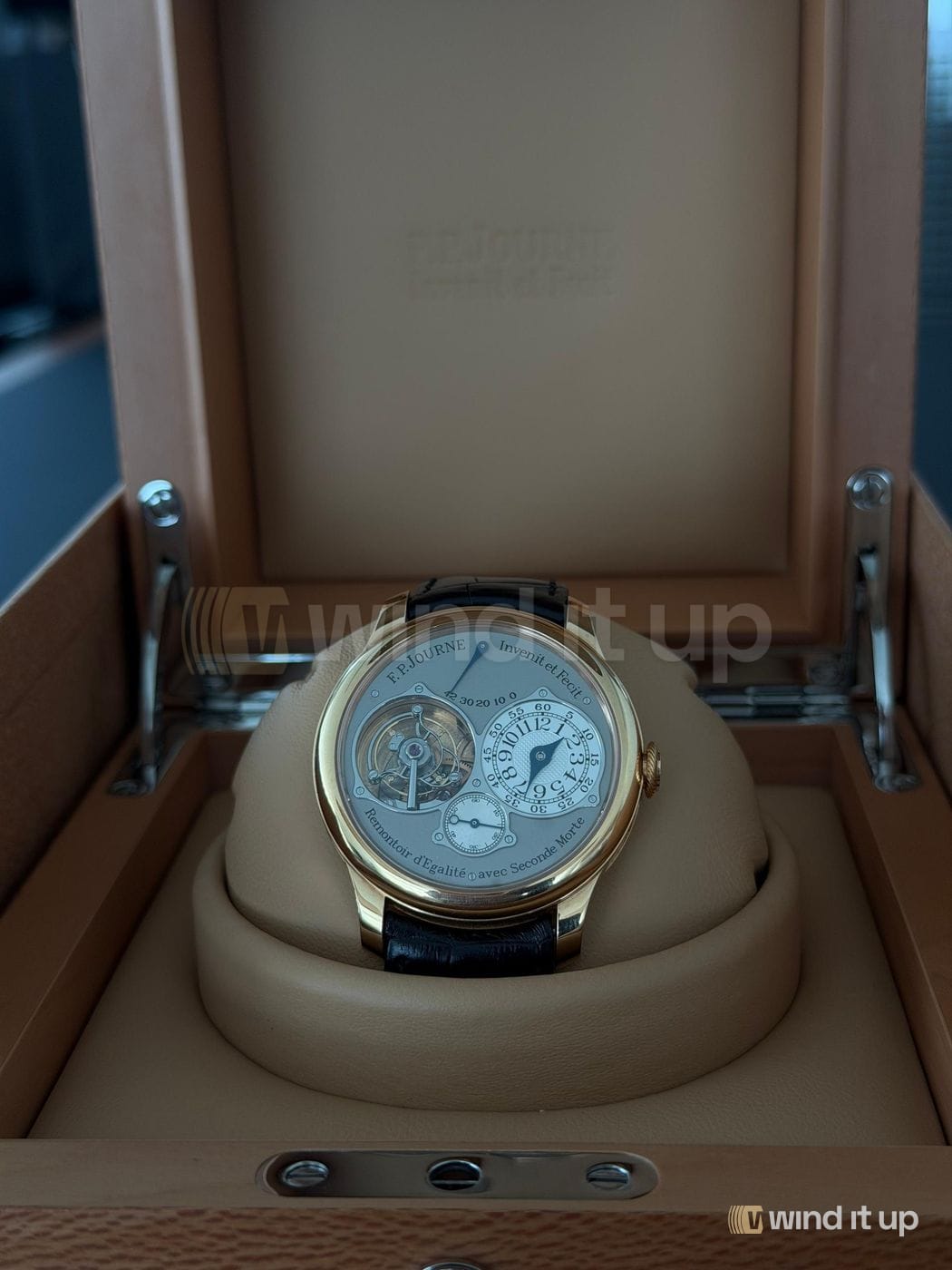
In 1991 Journe made a tourbillon wristwatch with a remontoir d'égalité. That watch became the basis for the Tourbillon Souverain. When he showed it at Basel, it got very little attention.
F.P. Journe, 1999
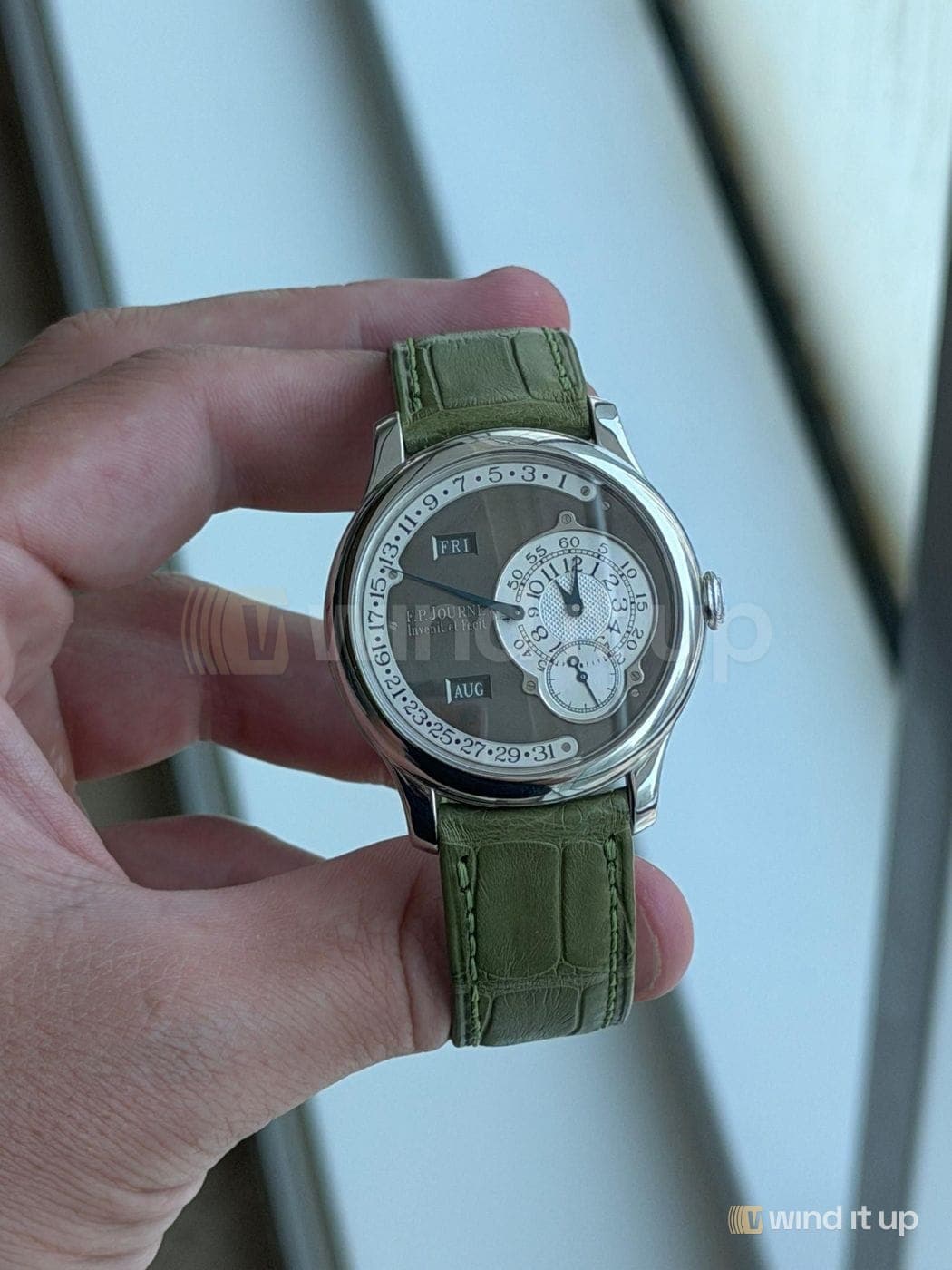
In 1999 he set up F.P. Journe in Geneva, with the motto Invenit et Fecit: "invented and made". The first watch was the Tourbillon Souverain. The Chronomètre à Résonance came in 2000, using two balances that synchronise with each other, an idea Breguet had explored centuries earlier. Then the Octa in 2001, his first automatic, with the calibre 1300 and around 120 hours of power reserve.
Early movements were made in brass. In 2004 he switched to 18k rose gold for plates and bridges, which became a signature of the brand. Around 2,000 brass movements were made between 1999 and 2004. That's why early pieces, like our Octa Calendrier from the Ruthenium series, are so collectible.
Staying Independent
In 2018 Chanel bought a 20% stake in the company. Journe kept control, and said production would stay at around 900 watches a year. For a brand whose whole reputation depends on doing things its own way, that independence matters.
Final Thoughts
The clock-restoring years explain a lot about F.P. Journe. The Résonance, the remontoir, the gold movements and the dials that look a little 18th century all come from someone who spent years taking apart the classics and rebuilding them. Then he made his own.
We've got a few Journes in the safe right now: the Tourbillon Souverain, an early brass-movement Octa Calendrier Ruthenium and the Octa UTC Boutique Edition.