Short on time? Krayon is a tiny independent brand founded in 2013 by Rémi Maillat, an engineer who previously worked on movements at Vaucher and Cartier. Its first watch, the Everywhere, came out in 2017. It mechanically calculates sunrise and sunset for any spot on Earth once you set the date, latitude, longitude and time zone. A diamond-set version, the Everywhere Horizon, won the Innovation Prize at the 2018 GPHG. The Anywhere followed in 2020: a smaller, simpler watch set to one place you choose.
Backstory
If you asked for "crayon watches" and landed here, you're in the right place. It's spelled with a K.
Most complications answer old questions. When is the next leap year? What's the time in Tokyo? What phase is the moon in? Krayon picked a question that sounds simple and isn't: what time will the sun rise and set today, where I'm standing?
The answer depends on the date, how far north or south you are, how far east or west you are within your time zone, and the time zone itself. Astronomers solve it with equations. Rémi Maillat solved it with gears and cams.
Who's Behind It
Maillat trained as an engineer before going into watchmaking. He worked at Vaucher, the movement maker, and then at Cartier, where he developed movements for its fine watchmaking collection. He started Krayon in 2013 in Neuchâtel, and it's essentially still his workshop rather than a brand in the usual sense.
Krayon has patented several of the ideas behind the mechanism. That matters, because sunrise and sunset indicators had been done before, but only for one fixed city.
The Everywhere
The Everywhere was presented in May 2017. Its movement has 595 components and 85 jewels. On the dial you get the time, the date and month, and two hands that sweep a 24-hour track to show sunrise and sunset. The section between them is the length of the day.
Setting it is the clever bit. Press the pusher at 8 o'clock and a small hand moves between Date, Lat, Long and UTC. You turn the crown to dial in each value. Latitude has its own fan-shaped scale on the left of the dial. Longitude and time zone sit at 12 o'clock, in half-hour steps. Move from Dubai to London, set the new values, and the watch recalculates.
It wasn't cheap. At launch it was reported at around CHF 600,000. The diamond-set Everywhere Horizon won the Innovation Prize at the GPHG in 2018, which was a big moment for a brand that had made only one watch.
The Anywhere
The Anywhere came in 2020 and is a different idea. Instead of letting you set any location, it's set to one place: wherever you live, where you were born, wherever means something to you. The location is set by a watchmaker adjusting the cam, so the dial is basically personal to its owner.
It's smaller too: 39mm and 9.5mm thick, with a manual-wind calibre C030 of 432 parts and around 72 hours of power reserve. The finishing has some lovely details. The Côtes de Genève on the bridges run in a wave rather than straight lines, and the shape of the bridge nods to Lake Neuchâtel. The wave itself is said to trace Neuchâtel's sunset times across a year.
On the Wrist
The Everywhere is a big, technical watch, and you feel that. The Anywhere is the one we'd wear. It's thinner, quieter and more emotional. A watch that tells you when the sun sets over your home town is a much better story than one that shows you can programme coordinates.
The honest downside is the same for both. Production is tiny and service has to go back to a very small team. That's the deal with almost every serious independent, and you should know it going in.
Final Thoughts
Krayon proves there are still new complications to invent. It took an engineer's question and turned it into one of the most poetic dials of the last decade. If you like your watches to be about where you are, not just what time it is, it's worth knowing the name.
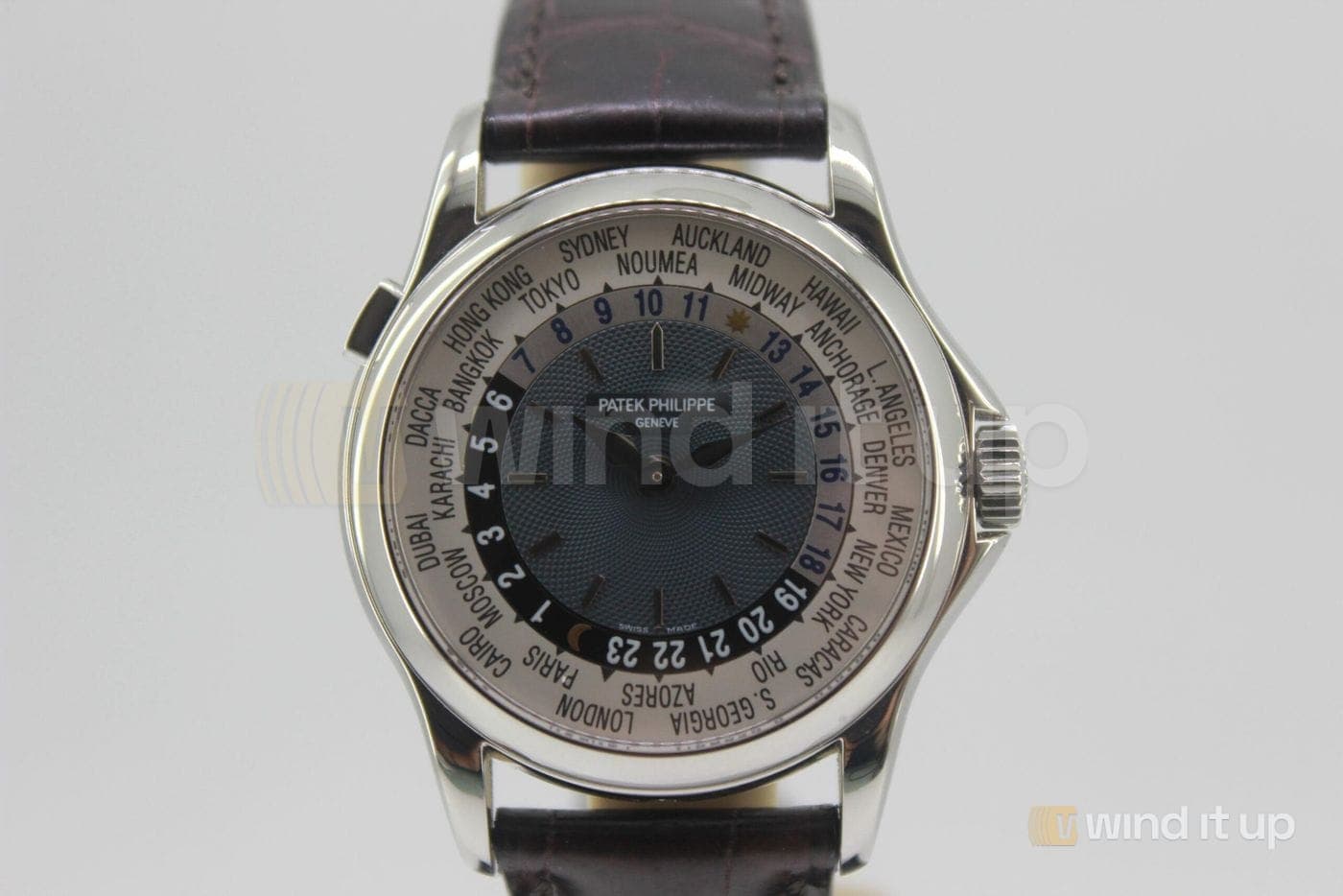
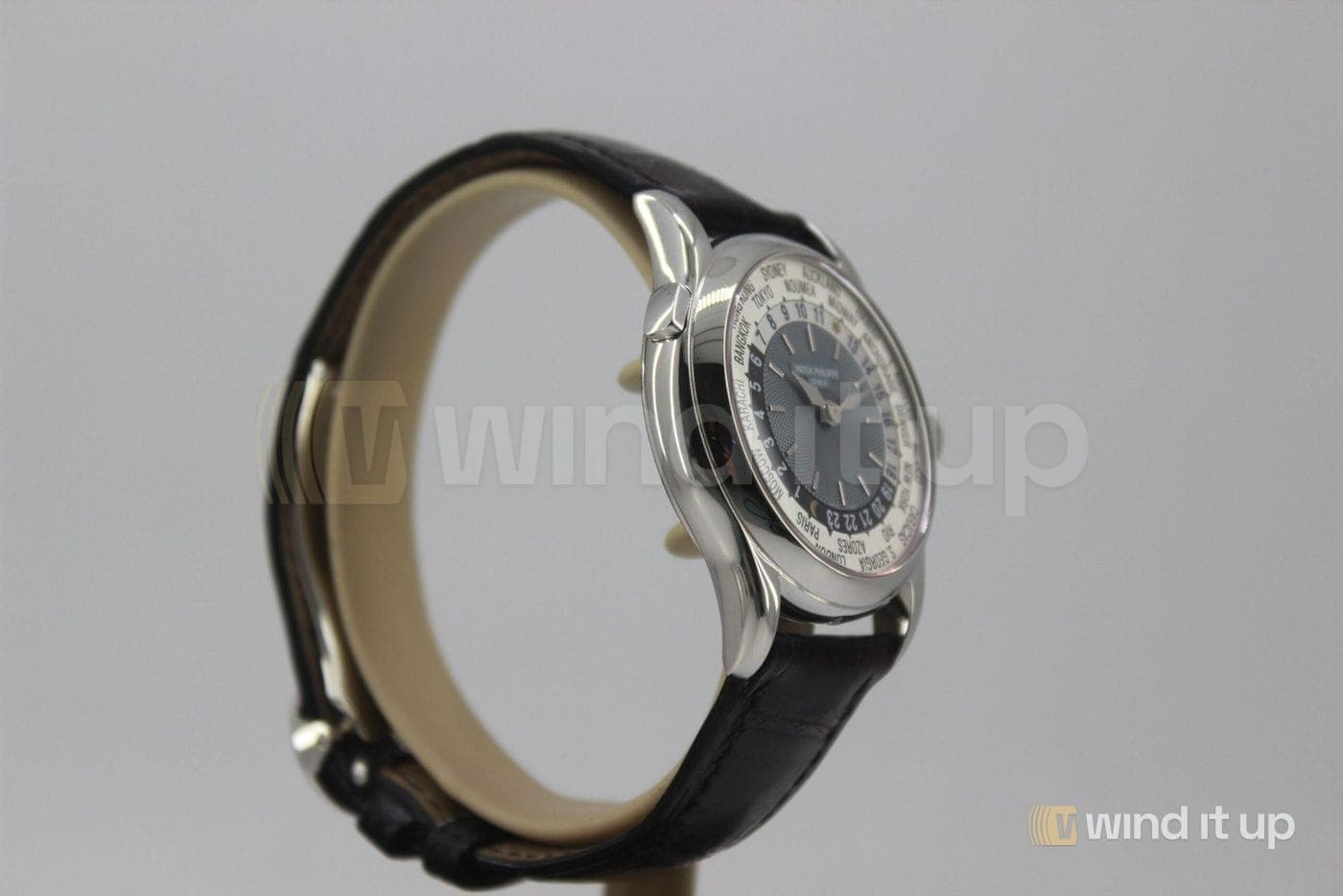
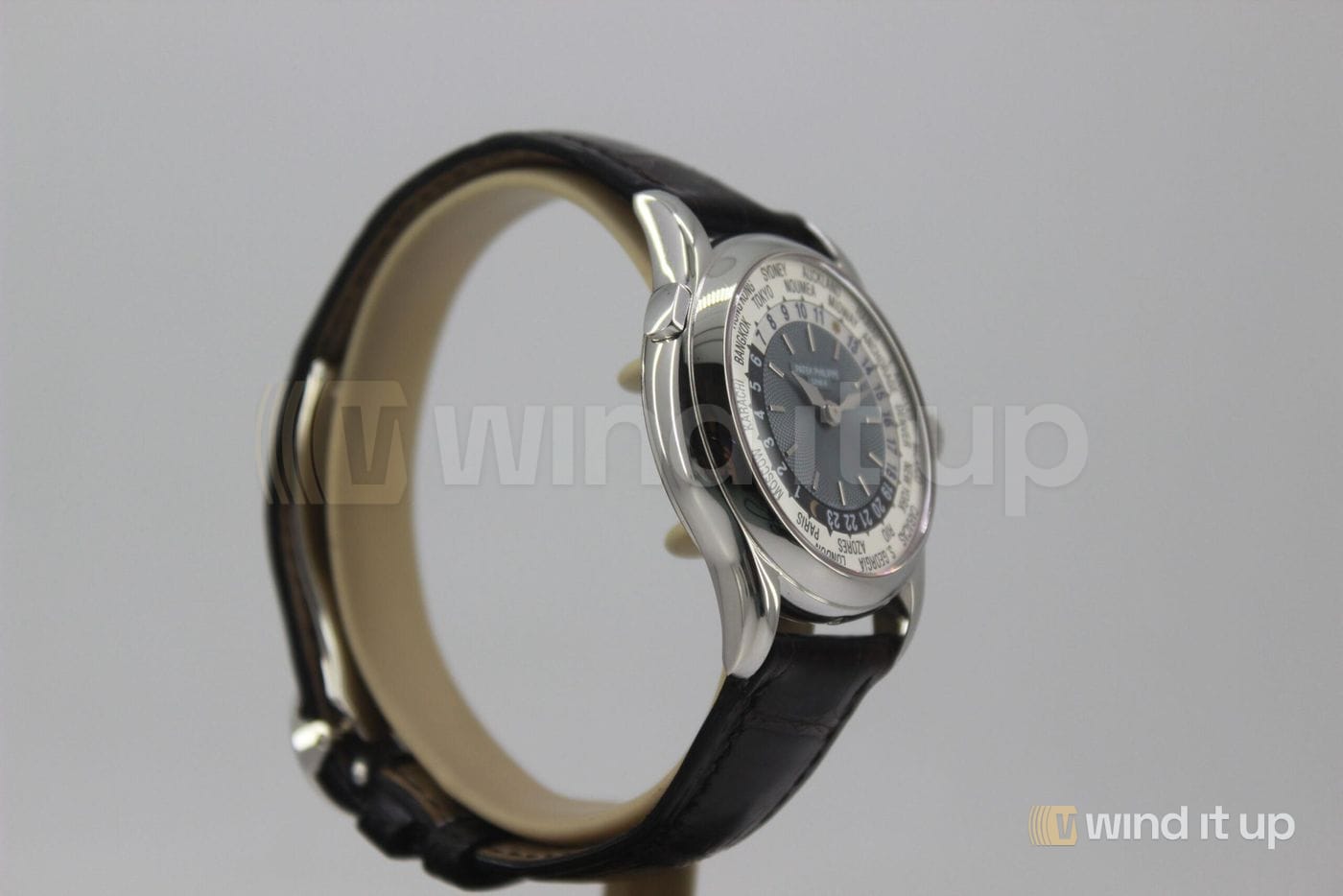
We don't have a Krayon in the safe. If you like watches that track where you are on the planet, our Patek Philippe 5110P World Time is the closest thing we have.