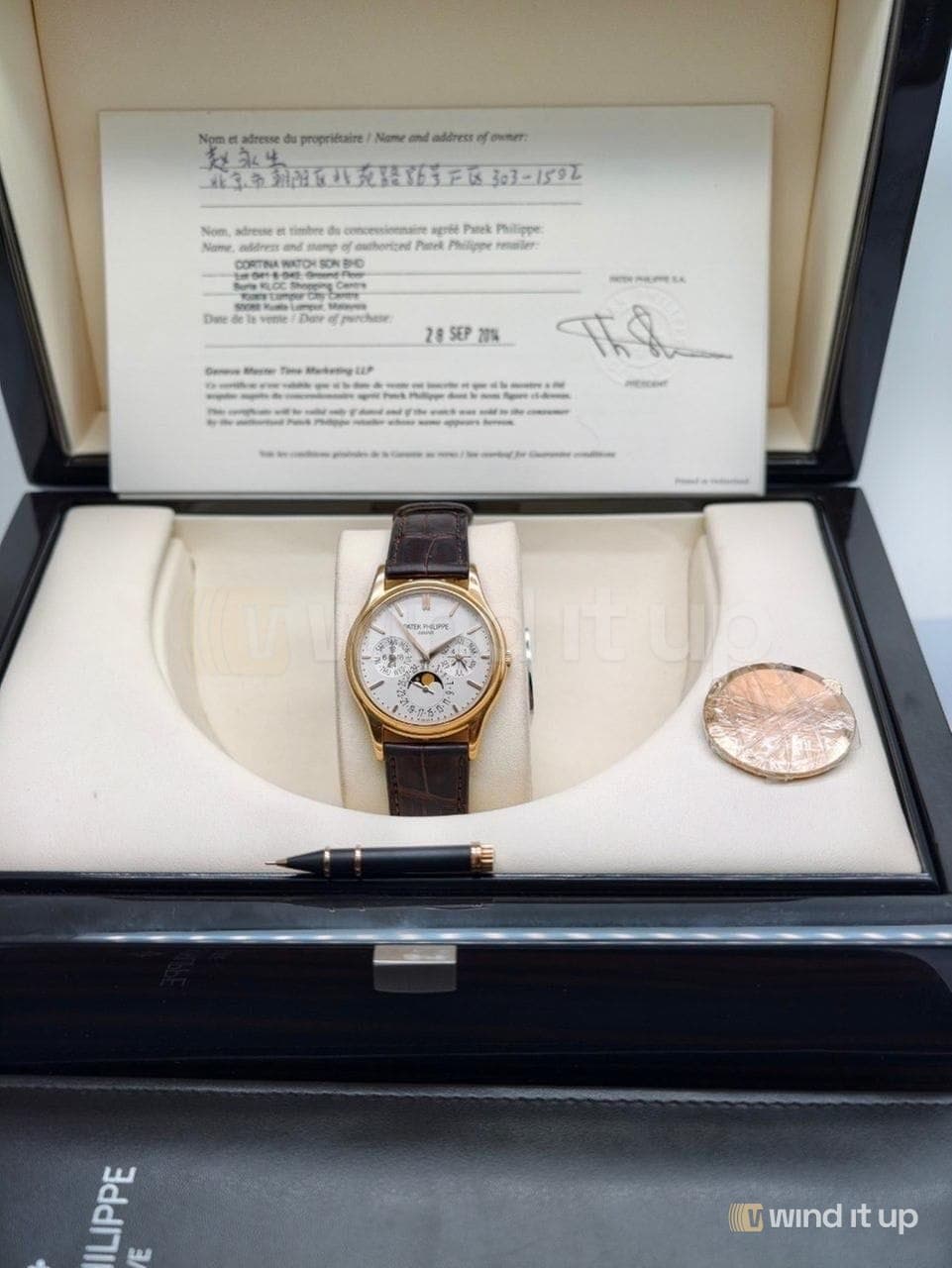
Short on time? The 5140 replaced the much-loved 3940 in 2006 and stayed in the catalogue until around 2015–2016. It kept the ultra-thin calibre 240 Q and the classic layout, but grew from 36mm to 37.2mm. The rose gold 5140R-011 with silvery white dial is one of the later versions, from around 2014.
Backstory
Following the 3940 was always going to be a thankless job. A lot of collectors think the 3940 is the definitive modern Patek perpetual calendar, and anything that came after would be judged against it.
Patek's answer was not to reinvent anything. The 5140 kept the movement, kept the layout and kept the feel, but grew a little: 37.2mm instead of 36mm. On paper that sounds like nothing. On the wrist, it's the difference between a watch that looks vintage-small and one that looks just right.
The Movement
The heart of it is the calibre 240 Q. The base 240 is one of Patek's most respected movements, an ultra-thin automatic with a gold micro-rotor set into the movement rather than sitting on top of it. That's why the whole watch stays so slim.
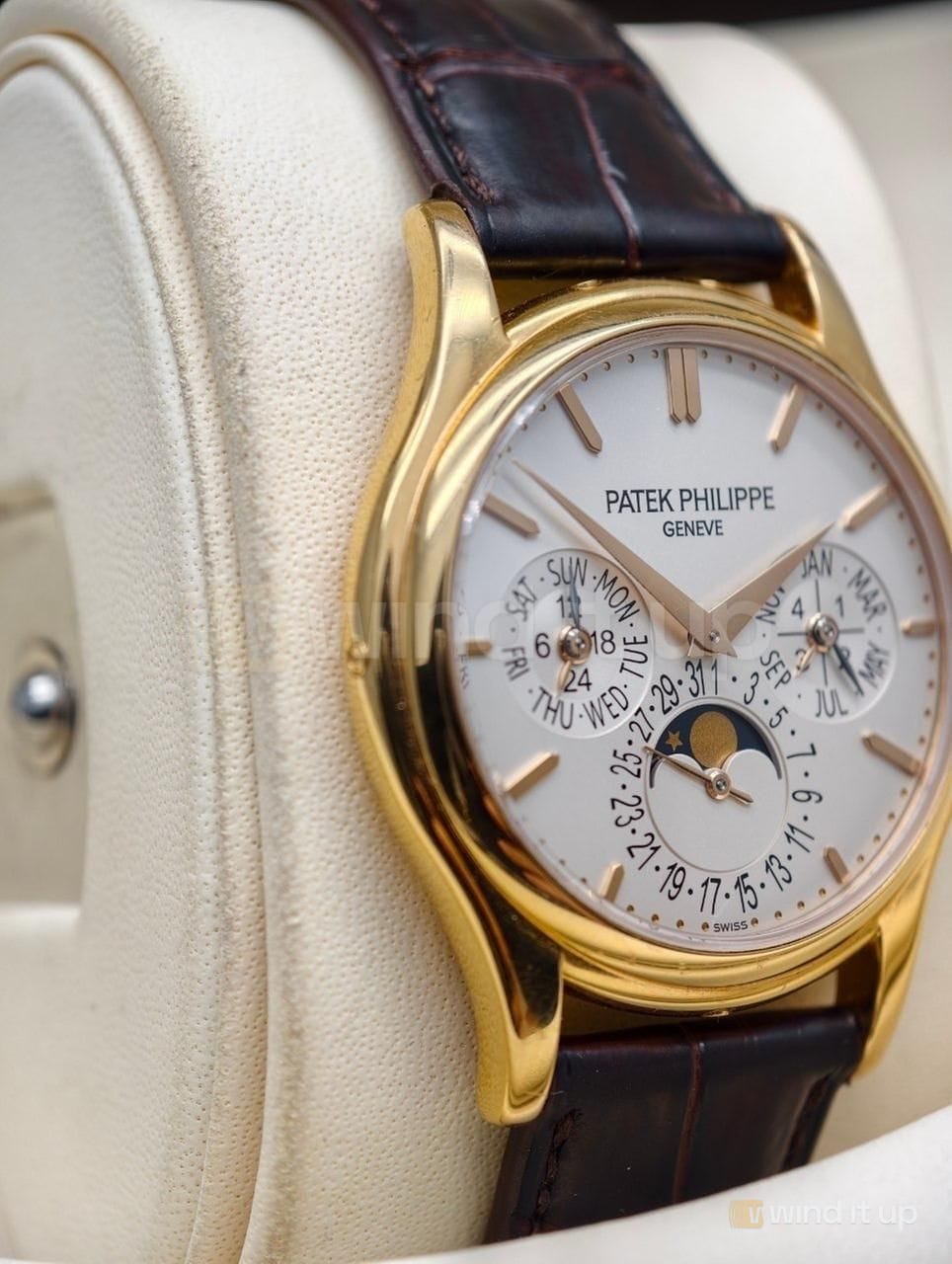
The "Q" is the perpetual calendar module. It knows how many days each month has, and it knows about leap years. As long as it keeps running, it won't need a date correction until 2100, when the Gregorian calendar skips a leap year. Add the day, month, leap year indicator and moon phase, and you have a lot going on in a case that's only about 12mm thick. Power reserve is around 48 hours.
Key Details
The dial is where the 5140 earns its reputation. Plenty of perpetual calendars look cluttered. This one somehow doesn't. The sub-dials are balanced, the applied gold markers are crisp, and the moon phase gives it just enough romance without tipping into kitsch.
In rose gold, the whole thing feels warm and a little old-school, in a good way.
On the Wrist
This is a proper dress watch. At 37.2mm it slides under a shirt cuff without any fuss, and because it's slim, it actually gets worn rather than saved for special occasions. That's the thing people miss about the 5140: it's a grand complication you can wear on a Tuesday.
The only real downside is one that applies to every perpetual calendar. If it stops and you need to set it again, you have to do it carefully and in the right order. And like most calendar watches, you shouldn't adjust it late at night while the date-change mechanism is working.
Final Thoughts
The 5140R is a great example of Patek doing what Patek does best: taking something that already works and refining it until it's almost invisible. It's not the loudest perpetual calendar out there, and that's exactly why we like it.
Ours is a 2014 5140R-011, a full set with Certificate of Origin. See it here.