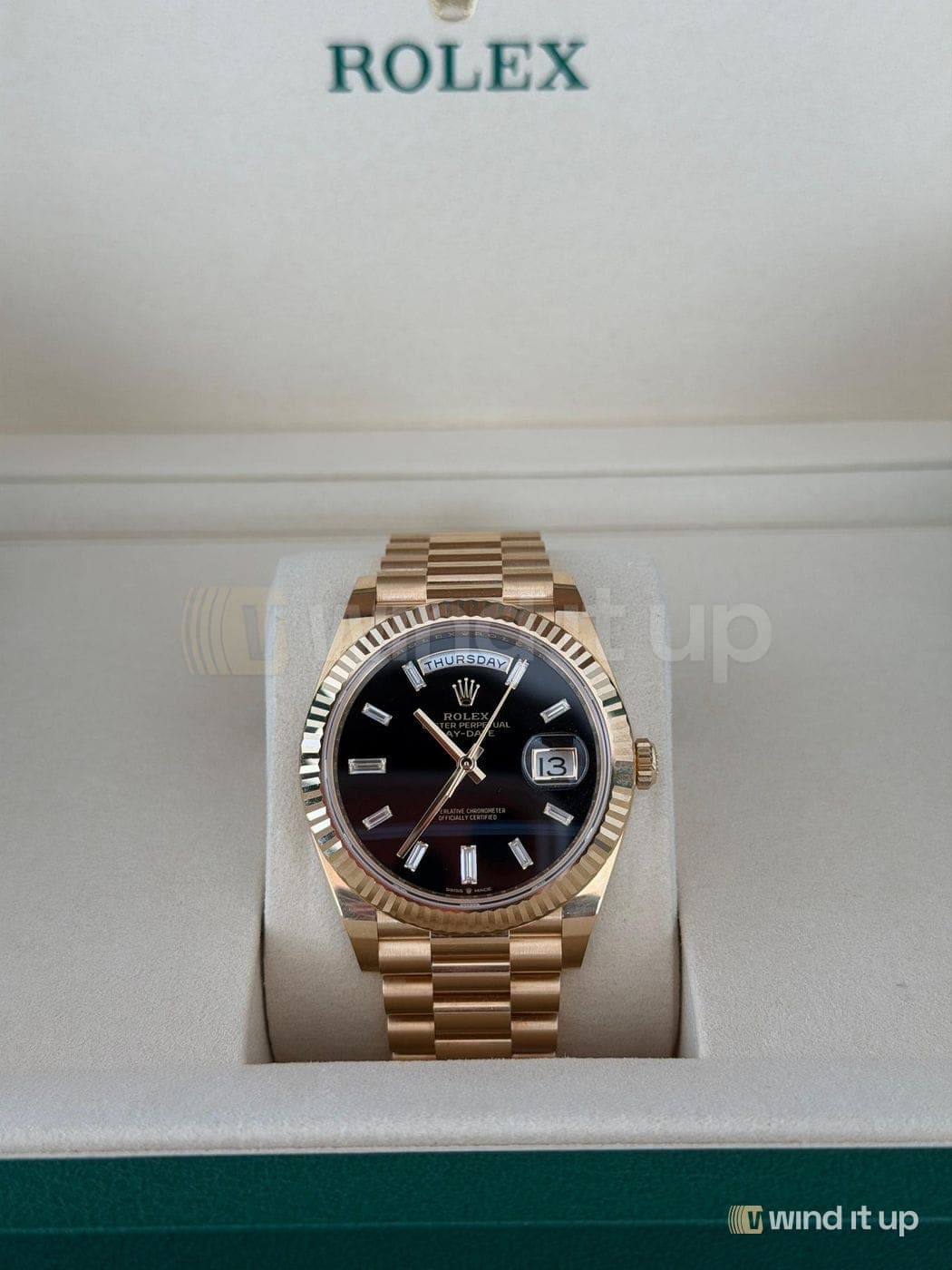
Short on time? The 228238 is the yellow gold Day-Date 40, introduced in 2015 with a new case and the calibre 3255. The onyx dial with diamond hour markers followed, dated by most sources to 2016. Natural stone, so no two dials are the same. President bracelet, 100 metres, about 70 hours of power reserve.
Backstory
The Day-Date was the first wristwatch to show the day of the week spelled out in full alongside the date. It's only ever made in precious metals, and it's nearly always on the President bracelet, which is why people often just call it "the President".
In 2015 Rolex refreshed it as the Day-Date 40, with a new case and the calibre 3255. The yellow gold version is the 228238.
Key Details
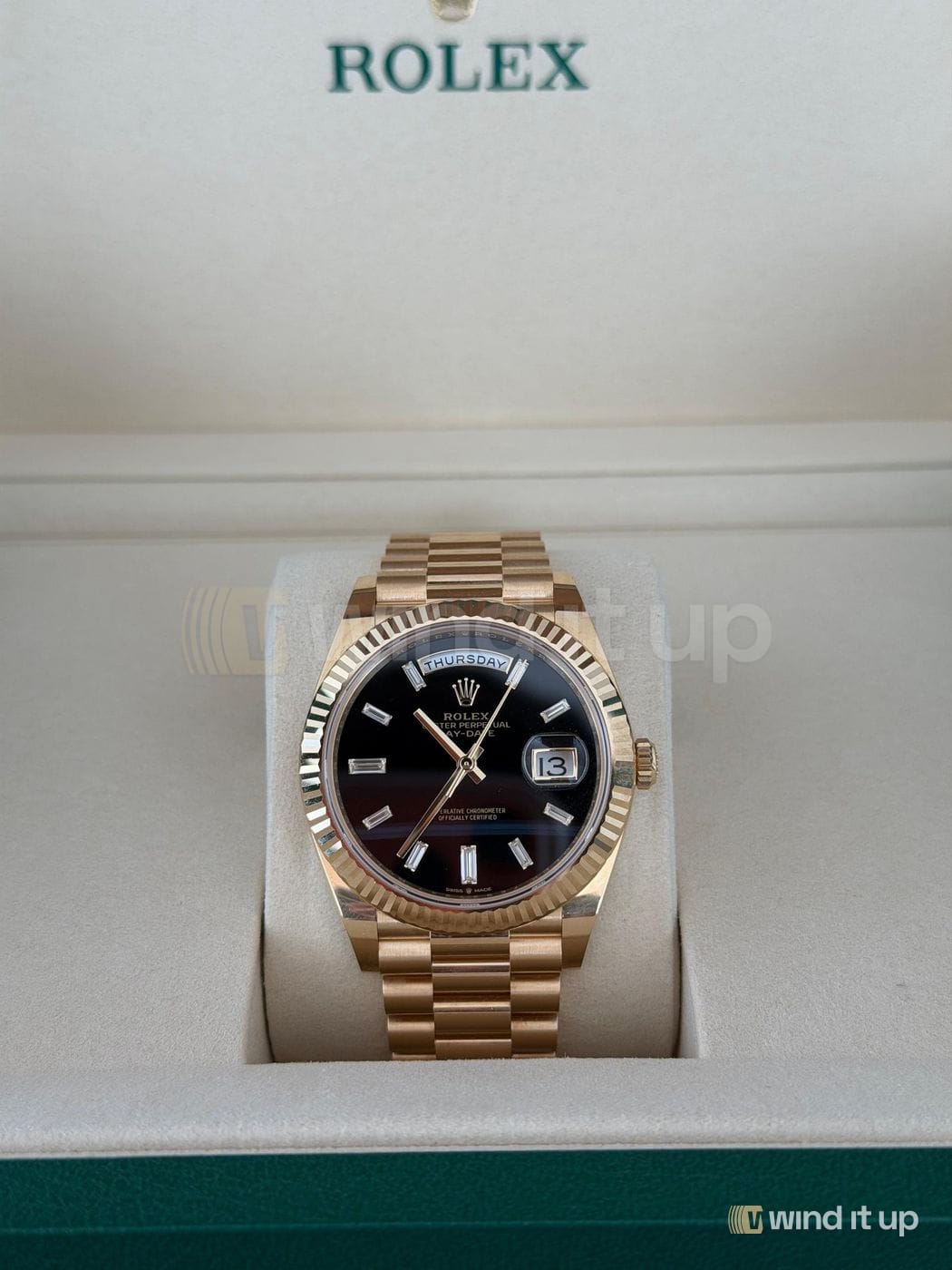
Onyx is what makes this one special. It's a natural stone, so every dial has its own depth and character. Against yellow gold, the deep black is dramatic without being loud. It makes the gold look even richer.
On this version the hour markers are diamonds, and that's all that's on the dial apart from the crown, the day window at 12 and the date at 3. No numerals, no clutter. Just stone, gold and light.

The Movement
The calibre 3255 arrived with the Day-Date 40. It uses Rolex's Chronergy escapement, runs at 28,800 vibrations per hour and gives around 70 hours of power reserve, with Superlative Chronometer certification. The day and date change instantly at midnight, which never gets old to watch.
On the Wrist
A 40mm gold Day-Date has real weight to it, and that's part of the appeal. The President bracelet, with its rounded three-piece links and concealed Crownclasp, makes the whole thing feel like one solid piece of gold.
The only caveat is the dial itself. Natural stone can't be repaired, so it's a watch to treat with a little care. It's also not a watch for blending in.
Final Thoughts
An onyx Day-Date is the kind of watch people buy once they already know Rolex and want something a bit more personal. Because every stone dial is different, each one really does feel like yours.
Ours is an unworn 2025 example, a full set. See it here.