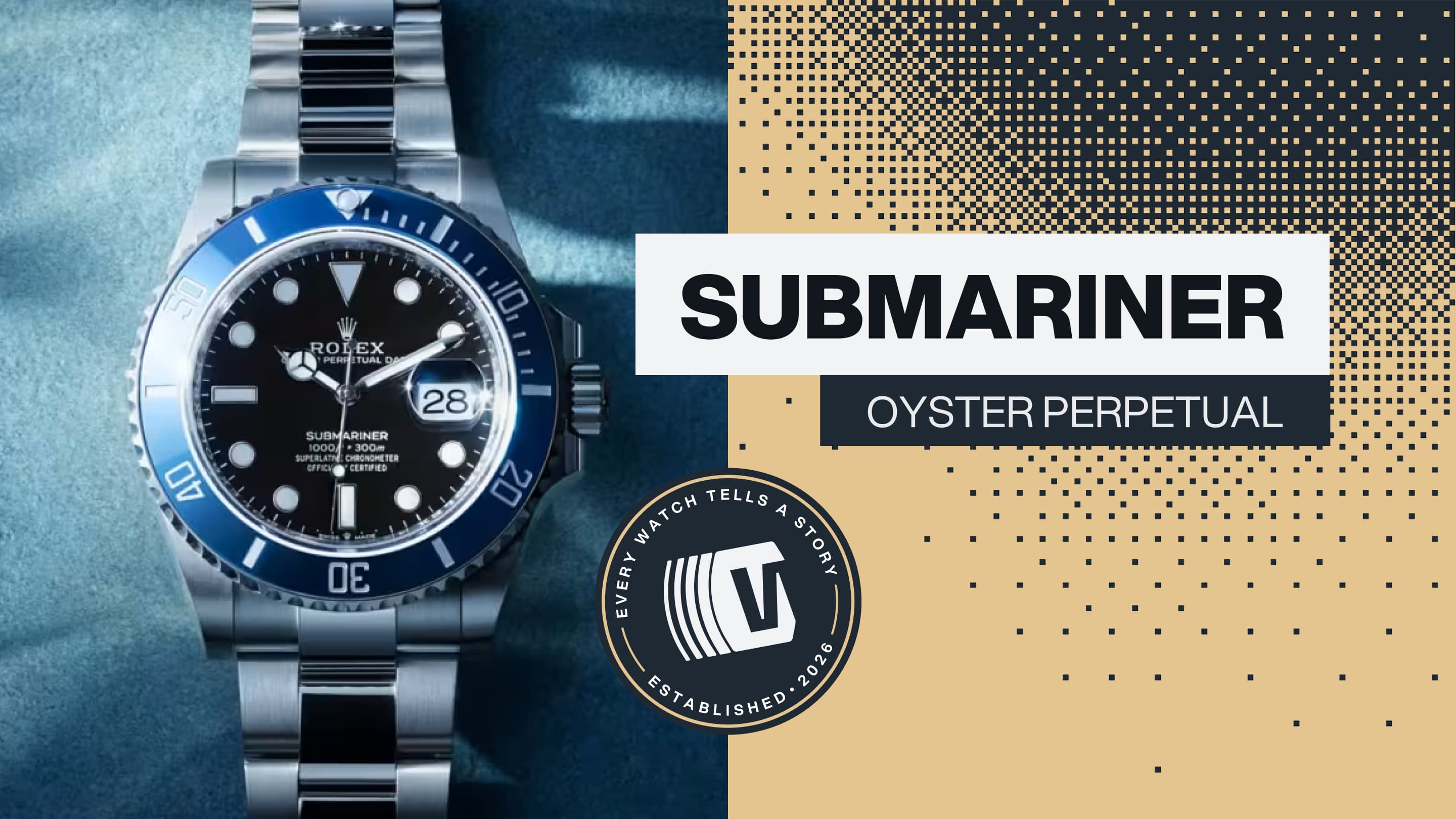
The Rolex secondary market has its own logic. References that are dismissed at launch quietly compound; references that win launch coverage quietly lose value. Here are the five discontinued pieces that we'd buy today if we could find them at the right number, with the reasoning each one sits in our buy column right now.
- 01
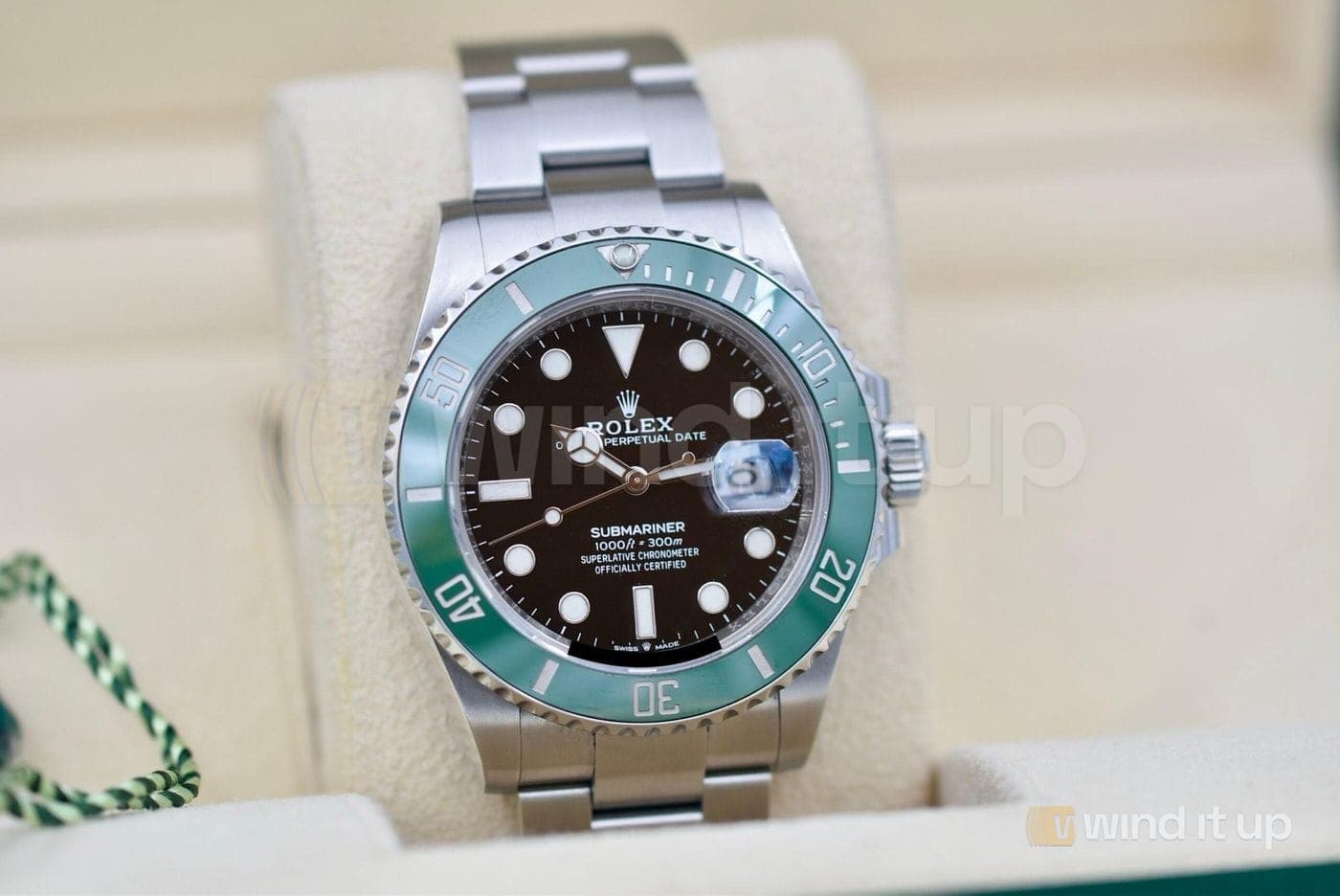
Submariner "Hulk" 116610LV
Discontinued 2020
The green-bezel, green-dial Submariner made from 2010 to 2020. Hated for the first six years ("too loud," "a tourist watch," "the Bell & Ross of Submariners"), then loved as soon as the 41mm 126610LV replaced it. The Hulk currently trades at roughly £18,000 in mint 2018-onward production — meaningfully above the 126610LN's retail and effectively the same price as the current LV. The discontinuation removed the supply but left the demand, and the demand has compounded year after year.
- 02
GMT-Master II "Coke" 16710
Discontinued 2007
The aluminium-bezel GMT-Master before ceramic. The Coke bezel (red/black) was made in significantly smaller numbers than the Pepsi (red/blue), and during the last three years of production Rolex switched from rectangular to rounded indices, creating a transitional sub-reference that knowledgeable collectors specifically seek out. Late-production examples with the rectangular indices have gained roughly 40% in the last five years. Mint 1999–2007 examples now trade £14k–£19k. Nobody saw this coming in 2010.
- 03
Daytona 116520
Discontinued 2016
The first in-house Daytona, calibre 4130, made 2000–2016. Almost the same watch as the current ceramic-bezel 126500 but with the steel tachymeter — and a longer-wait-list-price ratio in its prime. The 116520 white panda trades at £19k–£23k depending on year and configuration, with first-year (P-series 2000) examples commanding the strongest premiums. The case is identical to the current 126500LN, which makes side-by-side comparisons an exercise in bezel preference. Most dealers eventually decide they prefer the matt-aluminium tachymeter to the polished ceramic.
- 04
GMT-Master II "Batman" 116710BLNR
Discontinued 2019
The first ceramic blue-black GMT, made 2013–2019, on the Oyster bracelet. The Jubilee-bracelet 126710BLNR replaced it in 2019. Collectors increasingly prefer the older Oyster version — the Batman on Jubilee was Rolex acknowledging the dressier interpretation, and some buyers want the original tool-watch combination. Mint 116710BLNR examples now trade £15k–£17k, against £14k for the current Jubilee version. The premium isn't large, but it's directional.
- 05
Submariner 5513
Discontinued 1989
The reference Connery wore on screen as Bond. 40mm, no date, gilt dial in early examples (pre-1967), matte from the late 1960s. Production ran from 1962 to 1989, which sounds long but produced a slightly smaller volume than two years of modern Submariner output. The cleanest expression of the Submariner ever made — and the reference that drove the modern preference for the 126610LN and its no-date sibling. Mint matte-dial 5513s now command £20k–£40k; gilt-dial early examples can clear £100k at auction. Service-replacement parts are a value-killer; original-condition tritium dials are the configuration to seek.
If you want to know what's likely to be the next entry on this list, our The Secondary Market in 2026: Where Prices Are Actually Going piece names a few candidates. The short list: 116500LN white panda Daytona; 124060 no-date Submariner; 126710BLNR Pepsi-Jubilee. All three are still in production, but the supply / demand maths suggests they will not be in production indefinitely, and the secondary will remember.
The broader pattern across all five discontinued references on this list: each one was replaced by a watch that is technically superior but emotionally smaller. The new ceramic GMTs are objectively better watches than the 16710. The 126500LN is a better Daytona than the 116520. And yet the older references trade at a premium because the newer references are not, quite, the same watches. That's the signal to watch — when a successor is universally praised but the predecessor remains the more-asked-for piece, the market has made a quiet decision.
A note on buying discontinued references. The single biggest mistake we see new collectors make on discontinued Rolex is buying without paper. A 116610LV without warranty card and original box trades at a 25–35% discount to a fully-papered example, and that discount has been widening for the last five years. If you can only afford the watch without paper, the right move is to wait — paper-complete examples come up regularly enough that patience is rewarded. The exception is the 5513 Submariner, where original-condition vintage paper is so rare that mint examples without it still command serious prices.
On modern-vintage condition grading. Discontinued modern Rolex (anything from the 1990s onward) tends to come back in three condition tiers: unworn (still plastic-wrapped, with retail receipt), mint (worn but no visible scratches, all original parts), and excellent (signs of wear but full paper and original components). The price differential between unworn and mint is roughly 15%; between mint and excellent another 15%. Below excellent, prices fall off cliff-edge — service-replacement dials, polished cases, and aftermarket bezels can take a piece's value down 40–60%. We will only stock pieces in the top three tiers, and we always disclose the exact tier and what's been done to the watch since its production date — no surprises at handover.
If you'd like our quarterly note on what's moving in vintage Rolex specifically, <a href="/get-your-watch?audience=trade" class="linkish">open a trade account</a>. We track approximately 40 vintage Rolex references on a rolling pricing matrix.