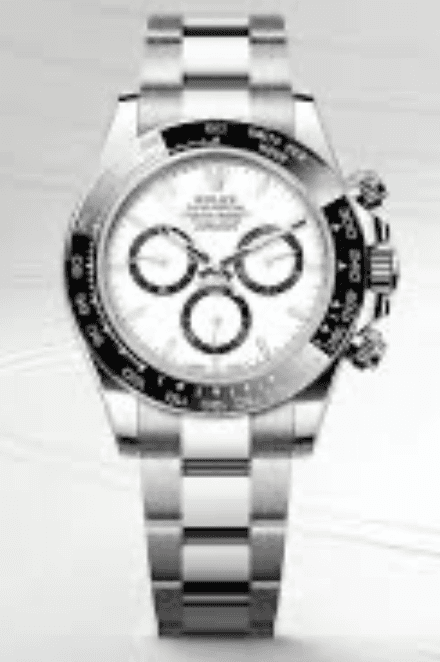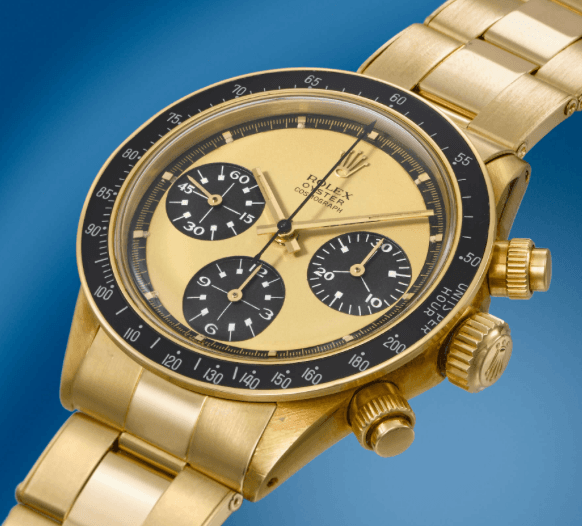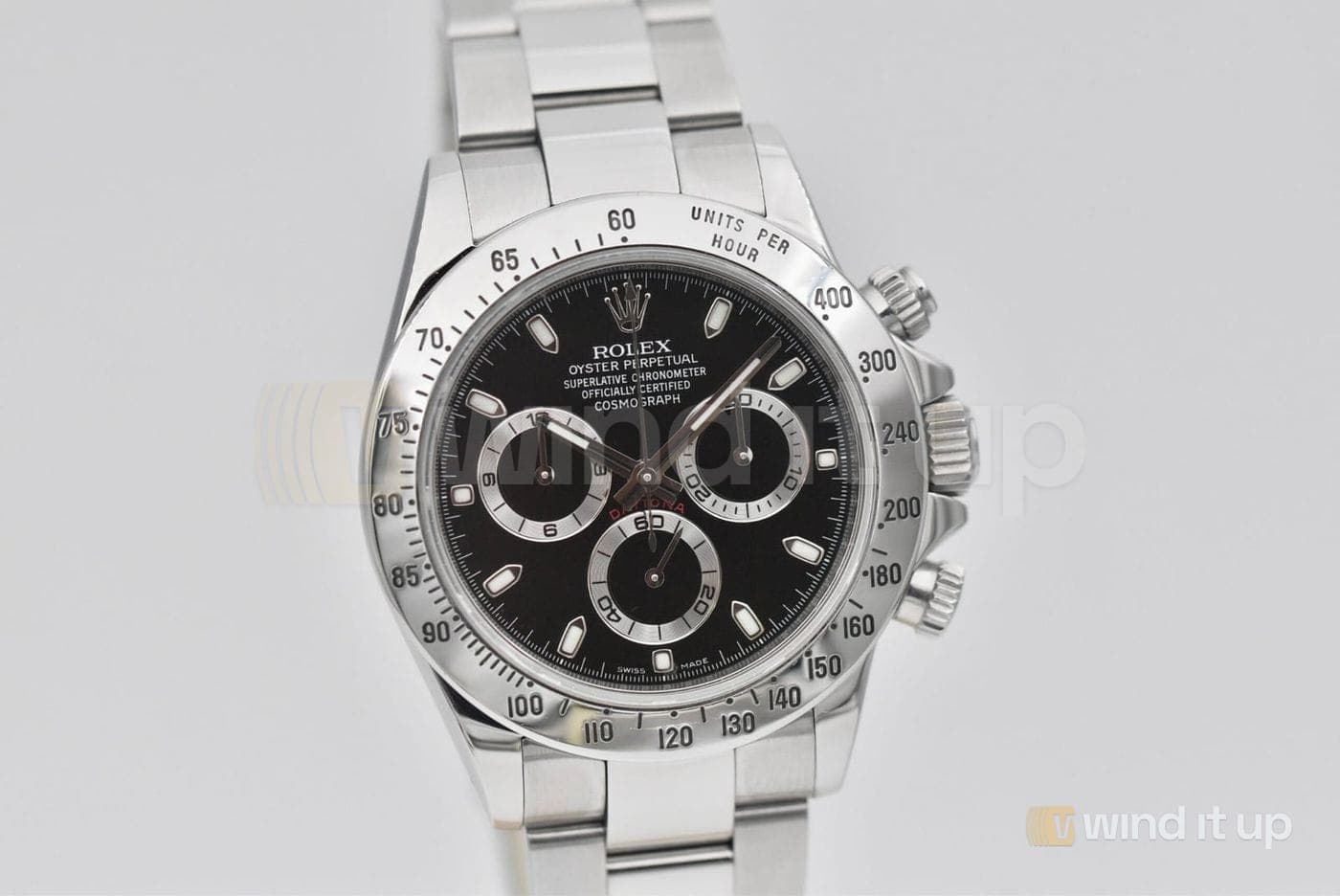
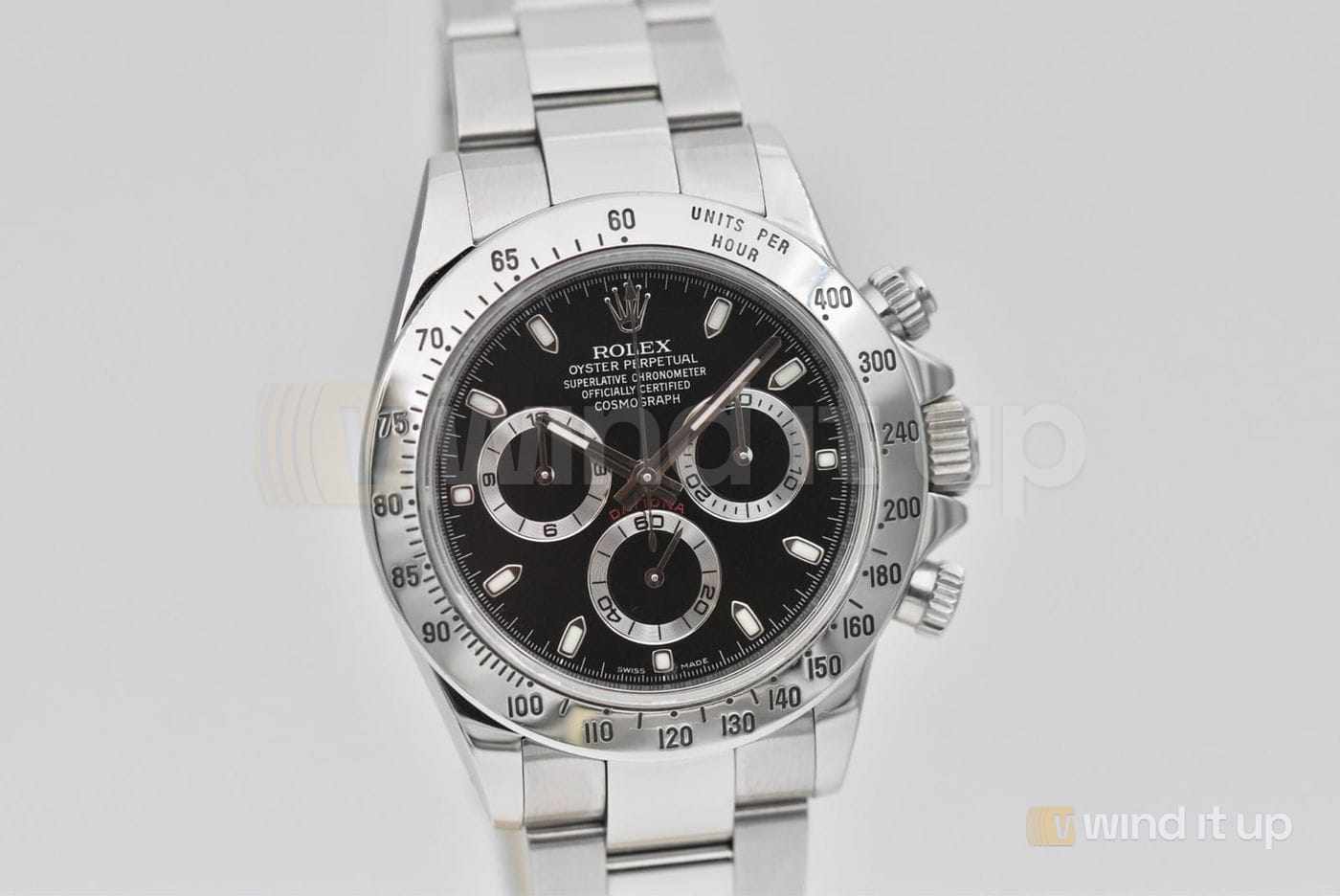
Short on time? The 116520 ran from 2000 to 2016. It was the first Daytona with Rolex's own chronograph movement, the calibre 4130, and the last steel Daytona with a steel bezel before ceramic arrived. 40mm, 100 metres, about 72 hours of power reserve. Black dial or white. We have one of each.
Backstory
The Daytona arrived in 1963 as a manual-wind chronograph for racing drivers, named after the Florida speedway. For years it barely sold, which seems ridiculous now.
In 1988 it went automatic, but Rolex didn't have its own self-winding chronograph movement, so it took Zenith's El Primero and reworked it heavily, including slowing it from 36,000 to 28,800 vibrations per hour. That gave us the 16520, still loved for its Zenith connection.
Rolex being Rolex, relying on someone else's movement in one of its most important watches was never going to last. In 2000, the 116520 arrived with the calibre 4130, made entirely in-house. That's the moment the modern Daytona really starts.
The Movement
The 4130 was designed with one priority above all: toughness. It uses a column wheel, which gives the pushers that crisp, precise feel, and a vertical clutch, so the chronograph can run for hours without hurting the timekeeping and starts without the little jump you get on cheaper designs. Rolex also built it with far fewer parts than a conventional chronograph, which makes it easier to service and harder to break.
Then there's the power reserve: around 72 hours. In 2000, that was huge for an automatic chronograph.
The best proof of how good the 4130 is? Rolex barely changed it for over twenty years. It went into the ceramic 116500LN, and its successor, the 4131 in today's 126500LN, keeps the same basic architecture.
Key Details
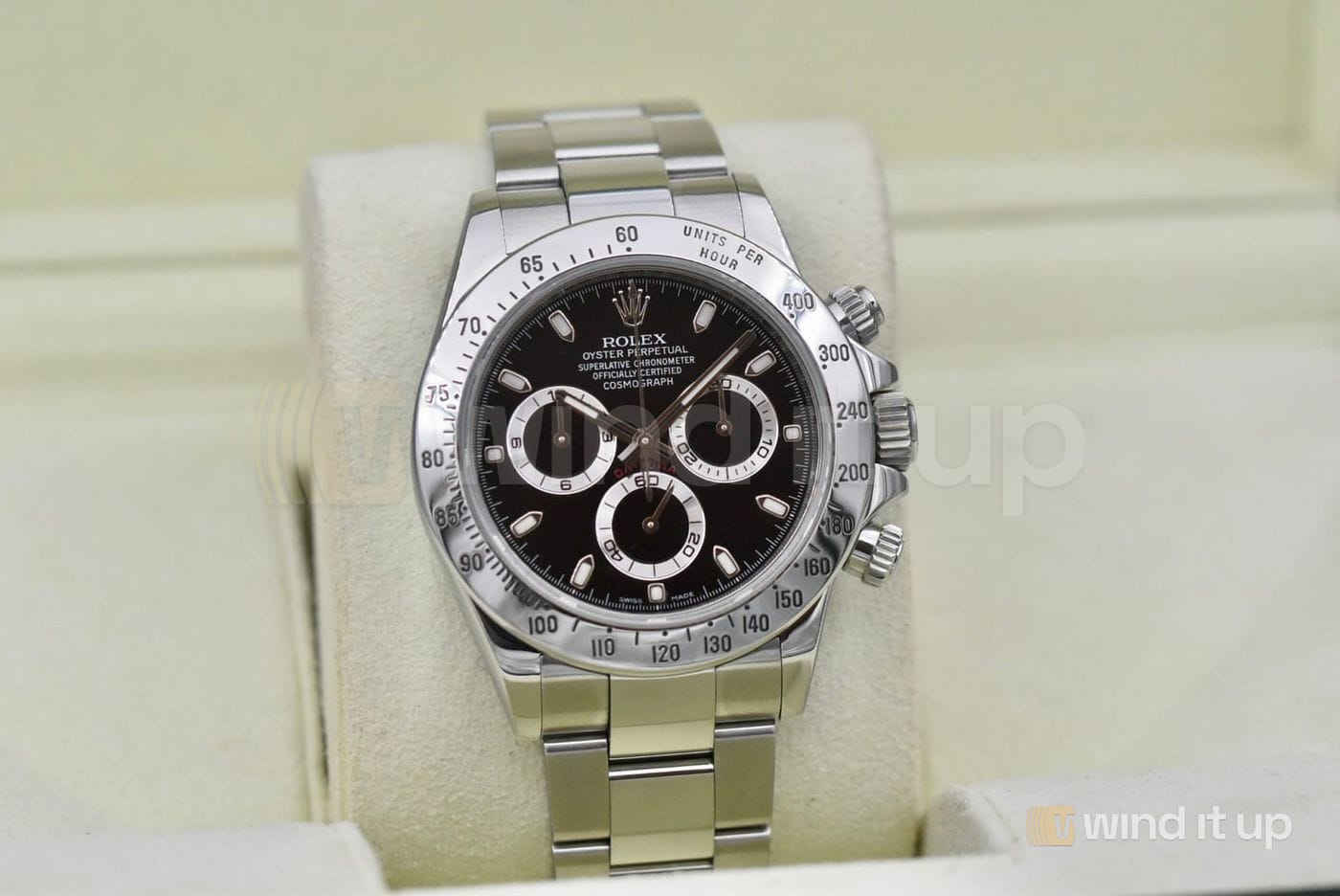
That steel bezel is the reason a lot of people prefer the 116520 to anything that came after it. The tachymeter scale is engraved into polished steel, so the whole watch reads as one piece of metal. It's quieter than ceramic, and it catches the light in a way ceramic never will.
Steel 116520s came with two dials. The white dial with black counters is the classic Panda look, and it often costs a bit more. The black dial with silver-ringed counters is more understated and, honestly, the more versatile of the two. We'd struggle to pick.
On the Wrist
At 40mm, it wears true to size. Screw-down pushers, a Triplock crown, 100 metres of water resistance. It's a proper tool watch that happens to be beautiful.
A note on polishing, because you'll see it come up. A good polish makes an older watch look close to new, but it removes metal, and done badly it softens the lug edges and blurs the line between brushed and polished surfaces. On a modern steel Daytona that's going to be worn, a careful polish is fine. We'd just always want to know about it.
Final Thoughts
The 116520 is where the modern Daytona begins: a movement good enough to last a generation, in a case with a steel bezel that will never go out of style. For a lot of collectors, us included, it's the sweet spot of the whole line.
We have two in the safe: a 2010 black dial and a 2011 white dial, both full sets.